
AI SEO Services (GEO & AEO Optimization)
Help your business become visible where people are searching next, inside AI assistants, answer engines, and AI-powered search experiences.
What Is AI SEO?
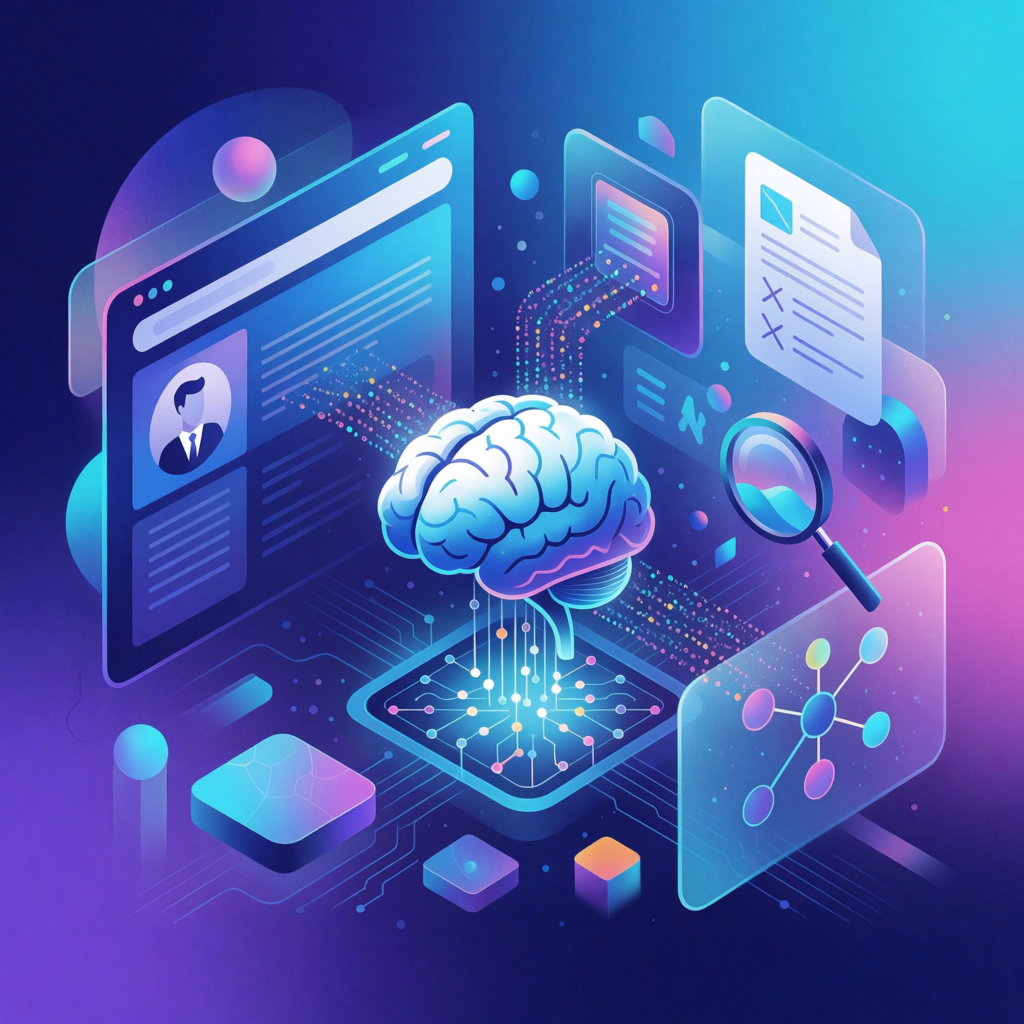
Traditional SEO helps your website rank in search results, while AI SEO helps your brand appear in AI-generated answers. It optimizes your content, entities, structured data, and authority so platforms like Google AI Overviews and ChatGPT can understand, trust, and reference your business. As AI becomes a primary way people search, AI SEO complements traditional SEO by increasing your visibility across both search engines and AI-powered experiences.
Traditional SEO vs AI SEO
|
Traditional SEO |
AI SEO |
|
Rank webpages |
Become reference-worthy |
|
Target keywords |
Map context, entities, and topics |
|
Win positions in SERPs |
Win mentions in AI-generated answers |
|
Build backlinks |
Build citations, authority, and trust signals |
|
Optimize titles and meta tags |
Optimize for question intent and answer extraction |
Our AI Optimization Services
Upraise delivers AI search optimization as a structured service line, not a side offering. Each engagement is built around the signals that AI systems actually evaluate, and the work is integrated with the rest of your SEO program so gains compound over time.

Generative Engine Optimization (GEO Services)
Generative Engine Optimization is the practice of shaping content so large language models can summarize, paraphrase, and cite it inside AI-generated answers. We audit your existing pages, identify the prompts and questions your customers ask AI assistants, and rewrite the content to be more quotable, more structured, and more semantically complete.

Answer Engine Optimization (AEO Services)
Answer Engine Optimization focuses on the formats AI assistants prefer: direct answers, definitions, step-by-step explanations, and FAQ blocks. We restructure your pages so that the answer to a common question is found in the first 60 words after the heading, increasing the chance of being surfaced as a featured answer in ChatGPT, Perplexity, and Google AI Overviews.

Entity SEO
Entity SEO strengthens the relationships between your brand, products, founders, locations, and the topics you want to own. We map your entity graph, fix inconsistencies across the web, and align your structured data with the way knowledge graphs represent your industry. AI systems reward clarity and consistency, and they penalize ambiguity.

Structured Data and Schema Markup
Structured data is the machine-readable layer that tells AI systems what your content actually means. We implement and validate Article, FAQ, HowTo, Organization, Product, and Service schema so crawlers, LLMs, and answer engines can extract clean, structured information from your pages.
Semantic Content Optimization
We improve the topical depth and contextual relevance of your content so it covers a subject the way an expert would. This includes entity coverage, internal linking, supporting subtopics, and the removal of thin or duplicated pages that dilute authority.

Knowledge Graph Optimization
We audit how your brand appears in major knowledge graphs, including Google Knowledge Panel sources, Wikidata, and industry-specific datasets, and we strengthen the signals that feed them. A strong entity footprint makes your brand easier for AI systems to identify and reference.

AI Citation Optimization
AI citation optimization increases the likelihood that AI systems reference your brand, statistics, or pages when generating answers. We improve source-of-record signals, third-party mentions, original-research markup, and quotable data points. We improve your eligibility for citations. We do not, and cannot, guarantee that any proprietary AI system will cite your brand, and we will never promise that we can.

Content Refresh for AI-First Search
Existing pages can usually be brought up to AI-readiness faster than building new ones. Our content refresh service re-optimizes your highest-value URLs for question intent, structured data, internal linking, and the topical completeness that AI systems look for.
Platforms We Optimize For
Upraise follows optimization best practices designed to improve your discoverability across the AI platforms shaping the next generation of search. No agency can guarantee inclusion or citations in any proprietary AI system, and we will never promise that. What we do is follow the signals those systems publicly document, and apply them at scale.

ChatGPT
Clear entities, quotable answers, structured data, and third-party sources that OpenAI’s crawlers can read and trust.

Google AI Overviews
Question-shaped headings, direct answers, schema markup, and the entity signals Google uses to assemble AI summaries.

Gemini
Topical authority, structured data, and brand consistency across the knowledge sources Gemini draws from.

Perplexity
Source-first content, original data, clean citations, and the freshness signals Perplexity weighs heavily in its answer layer.

Claude
Long-form, semantically dense content with clear reasoning structure and well-defined entities.

Microsoft Copilot
Bing-indexed content, schema markup, and authoritative signals that flow into Copilot’s answer layer.
Our AI SEO Process
Every Upraise AI SEO engagement runs through a six-step process designed for transparency, repeatability, and measurable improvement. The same process is used across our SEO audit engagements, so there is no gap between diagnosis and execution.
AI Visibility Audit
We benchmark how your brand currently appears across AI platforms. The audit covers AI discoverability, technical readiness, existing AI presence, brand mentions, and the queries your customers are already putting into ChatGPT, Perplexity, and Google AI Overviews. You receive a clear picture of where you stand before any work begins.

Entity Analysis
We review the entities that define your brand, your products, and your category. This includes your knowledge graph signals, entity consistency across the web, and any disambiguation issues that confuse AI systems. The output is an entity map that guides the rest of the engagement.
Content Gap Analysis
We evaluate the topics, questions, and intents that AI systems expect to find on your site but do not. The analysis covers missing topics, user intent patterns, AI search opportunities, and competitor coverage. It tells us exactly what to build or expand.


Content Optimization
We improve the structure, semantic relevance, answer formatting, internal linking, and entity coverage of the pages that matter most. Output is content that AI systems can read, extract, and cite with confidence.
Technical AI Readiness
We optimize the technical layer: schema markup, crawlability, structured data, site architecture, indexability, and the performance signals that feed AI retrieval. Technical AI readiness is the foundation the rest of the strategy depends on.

Performance Monitoring
We track AI visibility trends, organic performance, AI referral opportunities where measurable, and the content improvements that move the needle. Reporting is structured, honest, and tied back to the entity and topic work we did in the previous steps.
Why Choose Upraise
Upraise is built by SEO practitioners who have spent years optimizing enterprise and B2B websites for traditional search, and who have moved early into the AI search layer. Our differentiators are practical, not promotional.
Technical SEO expertise
Schema, crawlability, indexability, site architecture, and Core Web Vitals are the foundation of everything we ship.
Semantic SEO specialists
We build content around entities, topics, and intent, not just keywords.
AI-first content strategy
Every page we touch is designed to be read, summarized, and cited by AI systems.
Entity-based optimization
We treat your brand as an entity and align every signal to support that.
Data-driven reporting
We measure AI visibility, organic lift, and entity consistency with the same rigor we bring to traditional SEO.
Enterprise experience
We work with SaaS, B2B, and e-commerce brands operating at scale.